
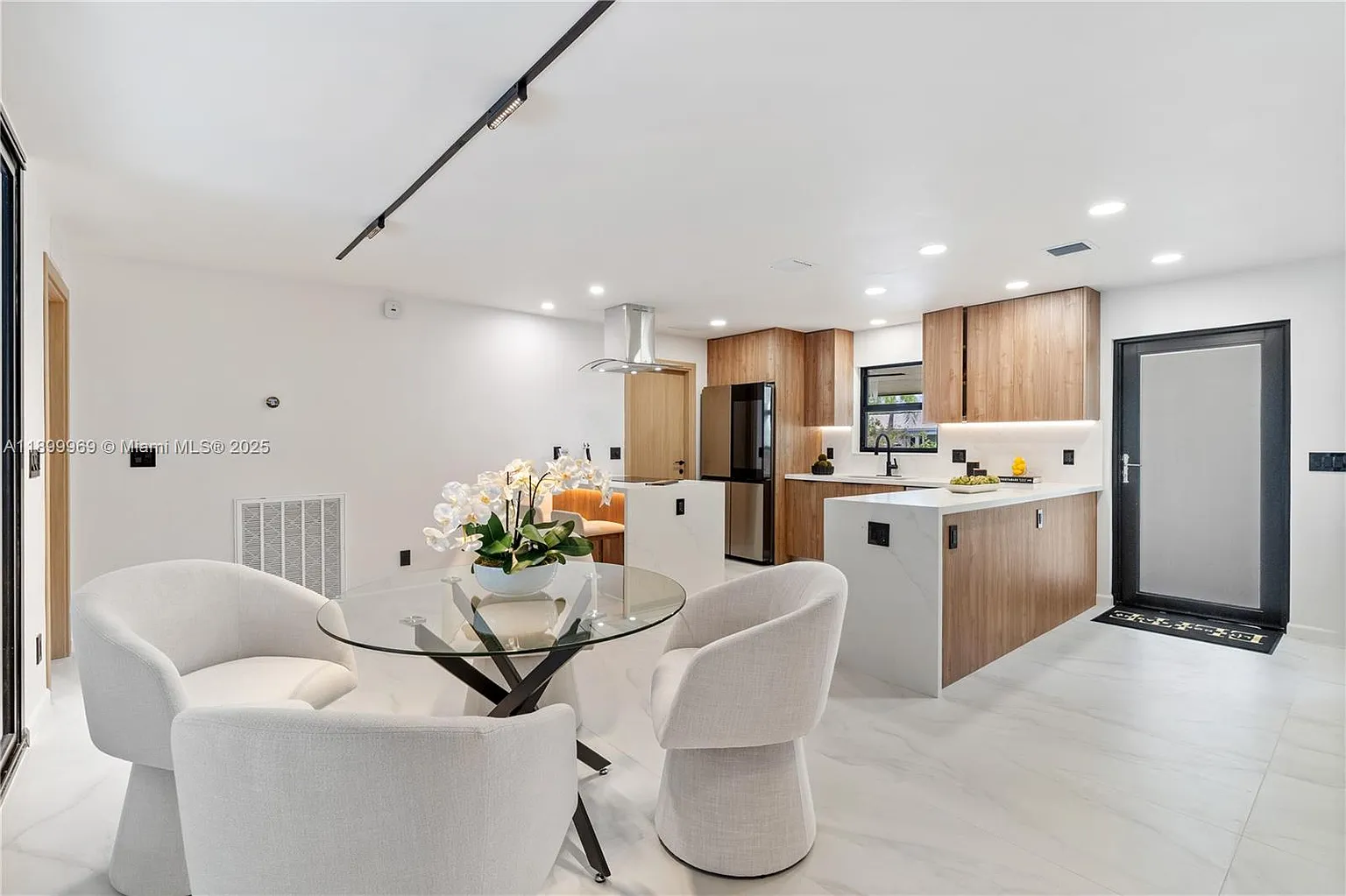
For years, the "smart home" was synonymous with visible gadgets — voice-activated speakers on every counter and bulky tablets mounted to walls. But as we move through 2026, the industry has undergone a radical shift. We have entered the era of Invisible Intelligence, where technology is no longer an add-on, but a fundamental building block of the architecture itself. In the luxury markets of Sunny Isles Beach and Fort Lauderdale waterfront, we are seeing developers embed AI-driven climate control, predictive maintenance systems, and biometric security directly into the infrastructure. The result is a home that anticipates — not just responds. Beyond technology, the defining architectural trend of 2026 is biophilic design: the intentional integration of natural materials, indoor gardens, and maximized natural light. The post-pandemic buyer has permanently recalibrated their relationship with indoor space, and the best properties in our market reflect this. Floor-to-ceiling glass, living walls, and seamless indoor-outdoor transitions are no longer luxury features — they are baseline expectations in the $2M+ segment. The practical implication for buyers: properties that don't embody these principles are facing accelerated obsolescence. We are already seeing a widening price gap between the "intelligently designed" inventory and traditional builds from even five years ago.
The Architecture of Real Estate: Defining the Home of 2026
By Oleg Sergiienko · 4 min read · Jan 2026
We treat every client's capital as we would our own — boutique South Florida brokerage, with institutional-grade analysis.